[CASE STUDIES & ARCHITECTURE SPECIFICATIONS]

Production architectures.
Shipped from zero to production.

Deep technical breakdowns covering single-point engineering ownership, database topologies, latency budgets, and production lessons.

01. Calibite (Mobile) 02. Bidraft (SaaS) 03. Nextduo (Gaming) 04. Listdir (Launch SaaS)
Calibite Production App
01 / 04 // MOBILE ARCHITECTURE
Mobile App · iOS & Android

Calibite

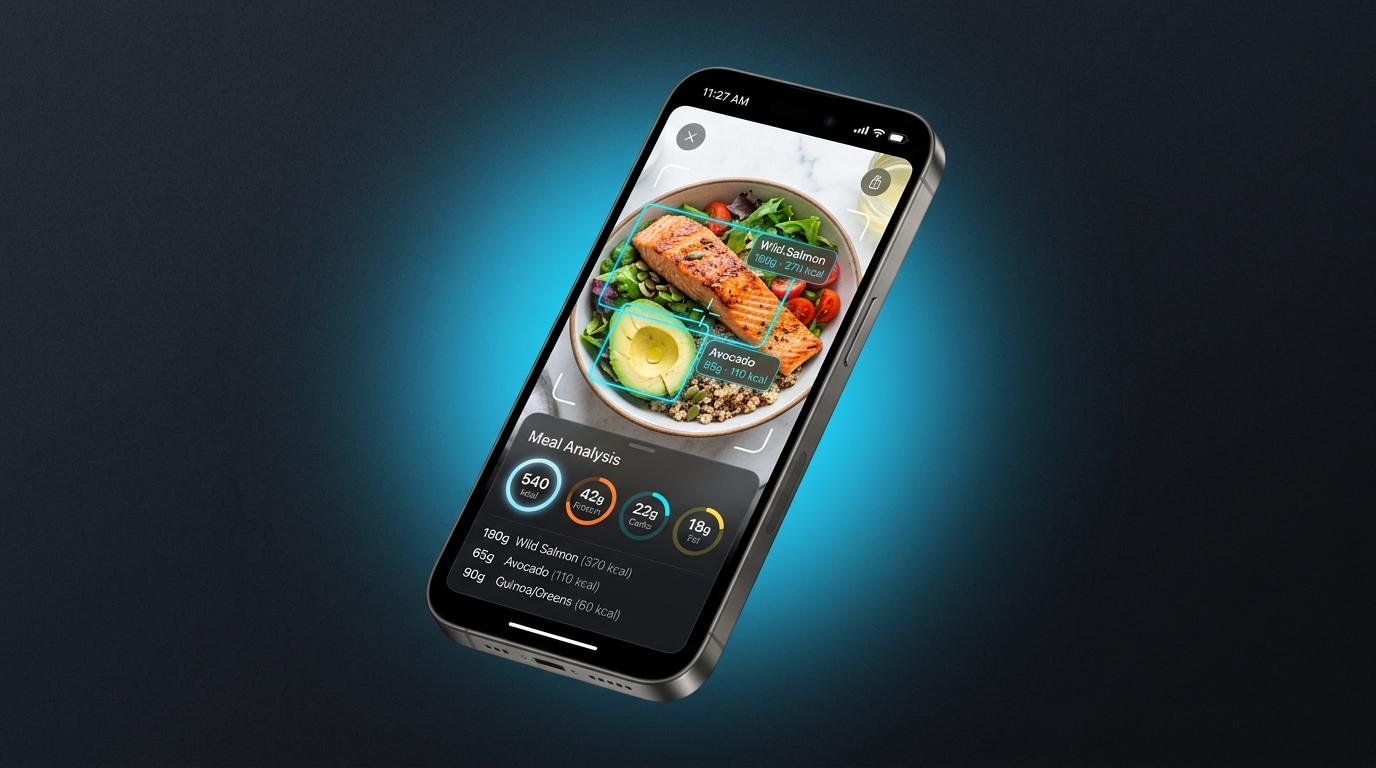
Multimodal computer-vision nutrition lab with real-time bounding-box inference, volumetric macro parsing, and nutritional stream telemetry.

React Native (Expo SDK 52) Firebase Cloud Functions OpenAI GPT-4o Vision Firestore Denormalized Logs EAS Build CI/CD Adapty (IAP & Paywalls) Native UPC Barcode Scanner
View on App Store View on Google Play Try Interactive Vision Lab →
The Problem
Manual food logging introduces severe input friction. Logging a single meal demands 5 to 10 manual database queries with high variance in portion estimation. Legacy tracking apps operate as passive tabular stores rather than active real-time inference systems.
The Solution
Calibite deploys a multimodal computer-vision pipeline backed by deterministic barcode fallbacks. An image buffer triggers real-time bounding-box inference, volumetric ingredient segmentation, and macronutrient decomposition within ~1.2 seconds.
Key Features
  • Real-time bounding-box inference: multimodal vision pipeline detecting ingredient coordinates and volumetric portions within ~1.2s
  • Streaming nutritional telemetry: instant macro breakdown streaming via server-sent events with sub-second time-to-first-token
  • Deterministic UPC fallback: automated barcode scanning trigger whenever visual inference confidence scores drop below 85%
  • 1M+ verified food database: indexed local and cloud nutrition taxonomy with single-document Firestore daily logs
  • Adaptive metabolic target engine: dynamic caloric and macronutrient partition modeling based on historical expenditure telemetry
  • Fridge-to-Fork pantry pipeline: instant recipe synthesis matching on-hand ingredients against strict macronutrient constraints

System Architecture & Data Pipeline

Client EngineReact Native (Expo managed) unified codebase for iOS & Android, utilizing native device bridges for camera, biometrics, and push.
Vision PipelineCloud Functions proxying GPT-4o Vision requests with image buffer compression (1024x1024) and exponential backoff retry.
Data PersistenceFirestore denormalized daily log schema, collapsing daily meal reads to a single document fetch.
Auth BoundaryFirebase Auth with in-place anonymous-to-authenticated conversion, eliminating upfront registration friction.
In-App PurchasesAdapty SDK for cross-platform Apple/Google IAP, entitlement synchronization, and paywall A/B testing.
CI/CD DeliveryEAS Build and Submit pipelines powering automated App Store and Google Play releases.
Computer Vision Pipeline Flow
[User Camera] ──(Base64/Buffer)──> [Cloud Function Gateway] │ ├──(Compression: 1024x1024 JPEG, Quality 0.85) ▼ [OpenAI GPT-4o Vision API] │ ├──(JSON Schema: FoodAnalysisResult) ▼ [Zod Contract Validation & Macro Normalizer] │ ├──(Confidence >= 0.85) ──> [Firestore Daily Log Document] └──(Confidence < 0.85) ──> [Trigger UPC Barcode Fallback]
Database Topologies & Collections
users/{userId} daily_logs/{userId}_{date} food_items/{itemId} user_goals/{userId} iap_entitlements/{userId}

Production Telemetry & Metrics

~1.2s
Vision Inference SLA
1M+
Food Database Entries
142ms
P99 API Latency
iOS + Android
Production Shipped
Bidraft Web App UI
02 / 04 // WEB SAAS ARCHITECTURE
Web Application · SaaS

Bidraft

AI procurement intelligence and automated RFP extraction engine. Converts complex briefs into structured, production-ready proposals backed by Supabase RLS security.

Next.js 16 App Router Turbopack & RSC Supabase PostgreSQL + RLS OpenAI GPT-4o Vercel AI SDK Tailwind CSS v4 Framer Motion Stripe Billing
Inspect in Shipped Console →
The Problem
Technical consultants and agencies spend 2 to 4 hours manually dissecting complex RFPs and re-drafting scope proposals from scratch. This manual overhead creates operational drag and introduces scope omissions across sales pipelines.
The Solution
Bidraft deploys an AI procurement intelligence engine with automated RFP extraction to parse unstructured technical requirements. Proposals stream into a collaborative editor with tenant isolation enforced by Supabase Row-Level Security.
Key Features
  • Automated RFP extraction: parses multi-page project briefs, technical requirements, and deliverable schedules into structured schemas
  • Streaming proposal intelligence: real-time draft generation powered by GPT-4o with variable injection and prefix prompt caching
  • Supabase RLS security: strict multi-tenant Row-Level Security isolating workspace proposals, member roles, and audit trails
  • Tokenized public review links: secure, permissioned client-facing proposal portals with cryptographic access logging
  • Usage-tiered credit ledger: transactional credit metering and workspace billing backed by Stripe webhooks
  • Modular template architecture: pre-compiled scopes for engineering, design systems, and retained technical services

System Architecture & Data Pipeline

FrameworkNext.js 16 App Router with Turbopack, utilizing React Server Components with streaming for the editor.
AI StreamingVercel AI SDK paired with GPT-4o, executing typed structured prompts via a custom variable injection engine.
DatabaseSupabase Postgres enforced with Row Level Security (RLS), strictly scoping all queries to authenticated workspaces.
API LayerServer actions and edge routes for streaming generation, public tokens, and workspace invites, all validated with Zod.
Service LayerDecoupled service layer isolating core business logic, proposal storage, and workspace credit tracking.
DeploymentVercel Edge Runtime for low-latency serverless execution and instant response streaming.
Streaming Proposal Pipeline Flow
[Brief Submission] ──> [Next.js Edge Route] ──(Credit Check)──> [Supabase Ledger] │ ├──(Compile Structured Prompt with Schema Constraints) ▼ [OpenAI GPT-4o API] │ ├──(Chunk-by-Chunk SSE Stream via Vercel AI SDK) ▼ [Client Rich Editor Canvas] ──(Autosave: 500ms Debounce)──> [Postgres RLS]
Relational Database Topologies (PostgreSQL)
workspaces (id, name, owner_id) workspace_members (workspace_id, user_id, role) proposals (id, workspace_id, content, state) templates (id, category, prompt_schema) credits_ledger (id, workspace_id, balance, audit_log)

Production Telemetry & Metrics

Sub-sec
First Token Time
GPT-4o
AI Generation Engine
100% RLS
Row-Level Data Security
0ms
Edge Cold Start
Nextduo Gaming App UI
03 / 04 // REALTIME SOCIAL INFRASTRUCTURE
Gaming · Dating · Social

Nextduo

Competitive matchmaking engine and realtime companion. Evaluates low-latency pairing algorithms over realtime PostgreSQL event queues.

Next.js TypeScript Supabase Realtime PostgreSQL + RLS Stripe Zustand TanStack Query Framer Motion React Hook Form + Zod
Inspect in Shipped Console →
The Problem
Generic social platforms treat gaming as an unindexed text tag. They fail to evaluate competitive rank, role distribution, schedule synchronization, or playstyle compatibility—the exact parameters players require for high-stakes coordination.
The Solution
Nextduo pairs players using a deterministic multi-factor compatibility algorithm. Match queues and state transitions are processed through realtime PostgreSQL event queues and broadcast over sub-50ms Supabase WebSockets.
Key Features
  • Low-latency pairing algorithms: multi-factor compatibility engine calculating weighted rank, role, schedule, and playstyle vectors
  • Realtime PostgreSQL event queues: instant match queue processing with composite B-tree indexing and pg_cron TTL eviction
  • Sub-50ms live messaging: peer-to-peer and room channels backed by Supabase Realtime WebSockets and presence indicators
  • Modular title integrations: verified competitive ranks and role badges for titles including Valorant and League of Legends
  • Entitlement architecture: config-driven feature flags gating tier-specific matchmaking filters and premium queues
  • Comprehensive safety suite: immutable user block lists, SSRF-guarded intake, and automated report pipelines
  • Accessible interaction design: WCAG AA compliant swipe gestures with Framer Motion and full keyboard navigation

System Architecture & Realtime Pipeline

State ModelThree-tier state architecture: TanStack Query for server cache, Zustand for global UI state, and React Context for authentication.
Compatibility EngineTypeScript scoring functions evaluating weighted multi-factor compatibility based on user intent.
EntitlementsCentralized feature flag map gating premium interface routes and components.
Realtime WebSocketsSupabase Realtime channels handling sub-50ms live messaging and user presence indicators.
Forms & ContractsReact Hook Form and Zod schemas powering step-by-step onboarding with automatic database syncing.
Security & SSRFRow Level Security on user data, SSRF guards on external inputs, and rate-limiting across auth endpoints.
Algorithmic Compatibility & Realtime Message Flow
[User Preferences] ──> [Compatibility Engine (Rank + Role + Schedule)] │ ├──(Normalized Score: 0 - 100%) ▼ [Interactive Swipe Deck (Framer Motion)] │ ├──(Mutual Match Confirmed) ▼ [Supabase Realtime Channel: private:chat_{matchId}] │ ├──(Sub-50ms WebSocket Broadcast) └──(PostgreSQL RLS Message Archive)
Relational Database Topologies (PostgreSQL)
profiles (id, username, bio, avatar_url) game_identities (user_id, game_id, rank, role, playstyle) matches (id, user_a, user_b, compatibility_score, status) messages (id, match_id, sender_id, content, created_at) entitlements (user_id, tier, stripe_sub_id, valid_until)

Production Telemetry & Metrics

< 50ms
Realtime Chat Latency
5+
Competitive Game Modules
WCAG AA
Accessibility Standard
Stripe
Subscription Monetization
Listdir Dashboard UI
04 / 04 // AUTONOMOUS LAUNCH & DIRECTORY AUTOMATION
Autonomous Startup Launch & Directory Automation SaaS · Chrome MV3 Side Panel Helper

Listdir

Autonomous Startup Launch & Directory Automation SaaS with a Chrome MV3 Side Panel Helper for human-reviewed, least-privilege directory submissions.

Next.js 16 App Router Supabase RLS Stripe Checkout Chrome MV3 Side Panel Human-in-the-loop Autofill Session-only Storage
Install on Chrome Web Store Inspect in Shipped Console →
The Problem
Startup founders lose launch momentum to repetitive directory forms, inconsistent product profiles, and manual proof collection. Fully autonomous submission is risky because every destination has different policies, sensitive fields, and review checkpoints.
The Solution
Listdir turns one reviewed product profile into an expiring launch workflow. The web app prepares targets, assets, and policy checkpoints; the Chrome MV3 side panel fills only supported, non-sensitive fields after an explicit user action and leaves final review and submission to the founder.
Key Features
  • Assisted directory autofill: prepares reviewed product data in the active tab without pressing submit or accepting terms
  • Human checkpoints: excludes passwords, CAPTCHA, payments, OAuth, hidden controls, and other consequential inputs
  • Least-privilege MV3 security: active-tab access, packaged code, restrictive CSP, and no broad all-sites permission
  • Expiring workflow bundles: session-only product data and progress with an explicit clear-session control
  • One-click undo: restores the values changed by the most recent fill while the page remains open
  • Launch operations: Supabase-backed directory playbooks, Stripe checkout, assets, and outcome reporting in one workspace

System Architecture & Browser Extension Pipeline

Launch Control PlaneProduct profiles, directory playbooks, campaign assets, billing, and outcome evidence stay in one authenticated workspace.
Chrome MV3 Side PanelPersistent review UI beside the destination page; packaged scripts and restrictive CSP keep the helper auditable.
Confidence GateField matching fails closed below the confidence threshold and reports skipped fields before the user decides what to do.
Human CheckpointsPasswords, CAPTCHA, payment, OAuth, terms, submit controls, and community actions remain outside the automation boundary.
Session StorageExpiring helper bundles and progress live in chrome.storage.session and can be cleared at any time.
Undo & EvidenceOne-click undo restores the latest fill, while target outcomes and operator notes make launch work reviewable.
Browser Extension MV3 Assisted-Fill Architecture
[Founder Reviews Target] ──> [LISTDIR Web App / Expiring Helper Bundle] │ ▼ [Chrome MV3 Side Panel + Active Tab] │ (Confidence-gated field matching) ▼ [Review Report + Assisted Fill + One-click Undo] │ (Founder submits manually) └──(Session-only progress)
Data Topologies & Storage Schemas
HelperBundle (product, targets, fields, expiry) HumanCheckpoint (blockedInputs, reviewRequired) FillProgress (prepared, skipped, confidence) UndoSnapshot (changedValues, target, timestamp)

Production Controls & Release Metrics

1.0.0
MV3 release package
0
Passwords stored
1-click
Undo latest fill
100%
Human-reviewed submission
What's Next

Let's build something extraordinary.

Ready to scope your product with a senior systems architect? Calculate your deliverables and timeframe in the interactive estimator.

Launch Project Estimator